
Written from a long-term family resort perspective, observing how children of different ages adapt to kids clubs during extended stays.
For many parents, a kids club feels like an obvious win. You arrive at a resort, see a bright room, a timetable full of activities, friendly staff, and think: this will give everyone a break. And often it does. At least in theory.
Children, however, do not experience kids clubs the way adults imagine them. Especially while traveling.
Travel itself is already intense for a child. New smells, new sounds, unfamiliar faces, different food, changes in sleep rhythm, time zones. Even confident, outgoing kids carry this stimulation quietly. When a kids club is added on top of that, the format matters far more than most parents expect.
This is where size becomes a critical, and often underestimated, factor.
How Children Process New Environments
Adults adapt to new environments primarily through logic. Children adapt through their nervous system. They feel before they understand.
But this is more than just an observation; it is a biological reality rooted in decades of research on sensory processing, a field pioneered by A. Jean Ayres. When a child's brain receives more sensory signals – noise, movement, unfamiliar faces – than it can comfortably process, it enters a state of physiological distress. Because the National Institutes of Health (NIH) has noted that sensory input directly impacts the functioning of the autonomic nervous system in early childhood, what looks like a "busy" room to an adult can feel like a chaotic environment to a child.
In practice, sensory overload rarely looks dramatic. More often it appears quietly. A child may stop participating. They may hover near the staff instead of joining. They may become unusually silent or, on the contrary, overly hyperactive. None of this means something is wrong with the child. It usually means the environment is asking more than their nervous system can comfortably process at that moment.
Noise, crowd density, frequent transitions, unfamiliar adults. Each factor alone is manageable. Combined, especially during travel, they accumulate.
This is not a failure of design or intention. It is usually a matter of scale.
What Large Kids Clubs Are Designed For
Large kids clubs exist to solve a logistical problem.
In big resorts, dozens of families arrive simultaneously. Children of different ages need supervision. Activities must follow a schedule. Staff rotate in shifts. Clear systems are required to keep everything running safely and predictably.
From an operational point of view, this makes sense. These clubs are optimized for volume. Typical group sizes can range from 15 to 25 children per room, sometimes more, with staff-to-child ratios designed to meet safety standards rather than individual pacing.
For certain children, especially older ones or highly social personalities, this environment works well. They enjoy the buzz. They like structured activities and the feeling of being part of something big. For short stays, this stimulation can feel exciting rather than exhausting.
The core goal of large kids clubs, however, is efficient management. Individual emotional regulation is not their primary design focus. That does not make them bad. It simply defines their limits.
A kids club doesn't overwhelm children because it's loud or busy. It overwhelms them when it asks for more regulation than their nervous system can give.

How Small Kids Clubs Change the Experience
In smaller kids clubs, the experience shifts in less visible but important ways.
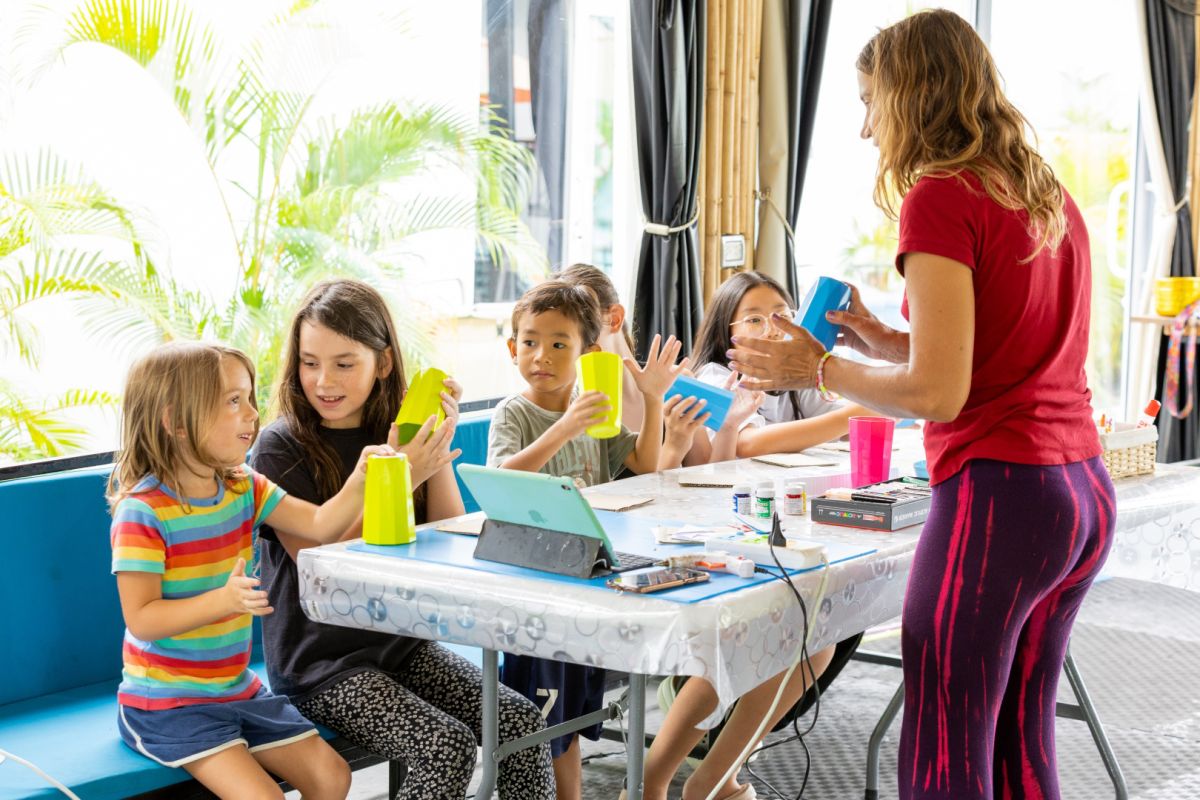
With fewer children present, often 5 to 8 at a time, staff are not primarily managing a group. They are responding to individuals. They notice hesitation. They recognize when a child needs time before joining. They can slow down or pause without disrupting a whole program.
This changes behavior. A child who withdraws in a crowded environment often becomes curious in a smaller one. Participation feels optional rather than expected. That sense of choice creates emotional safety.
Activities tend to be shorter and more flexible. Transitions are gentler. Children can observe before engaging. They can step away without feeling like they are breaking the flow.
This flexibility is difficult to scale. It relies heavily on staff presence, attention, and consistency. That is why it is rare in large-format clubs.
Entertainment Versus Engagement
One of the most misunderstood ideas around kids clubs is the goal of keeping children busy.
Entertainment focuses on distraction. Engagement focuses on involvement.
Child development research consistently shows that regulation precedes participation, especially in unfamiliar environments.
Many clubs rely on continuous stimulation to maintain attention. Loud group games, rapid activity changes, screens as fillers between sessions. This can work in the short term, but it often leaves children more tired rather than more settled. On vacation, when baseline stimulation is already high, this effect compounds.
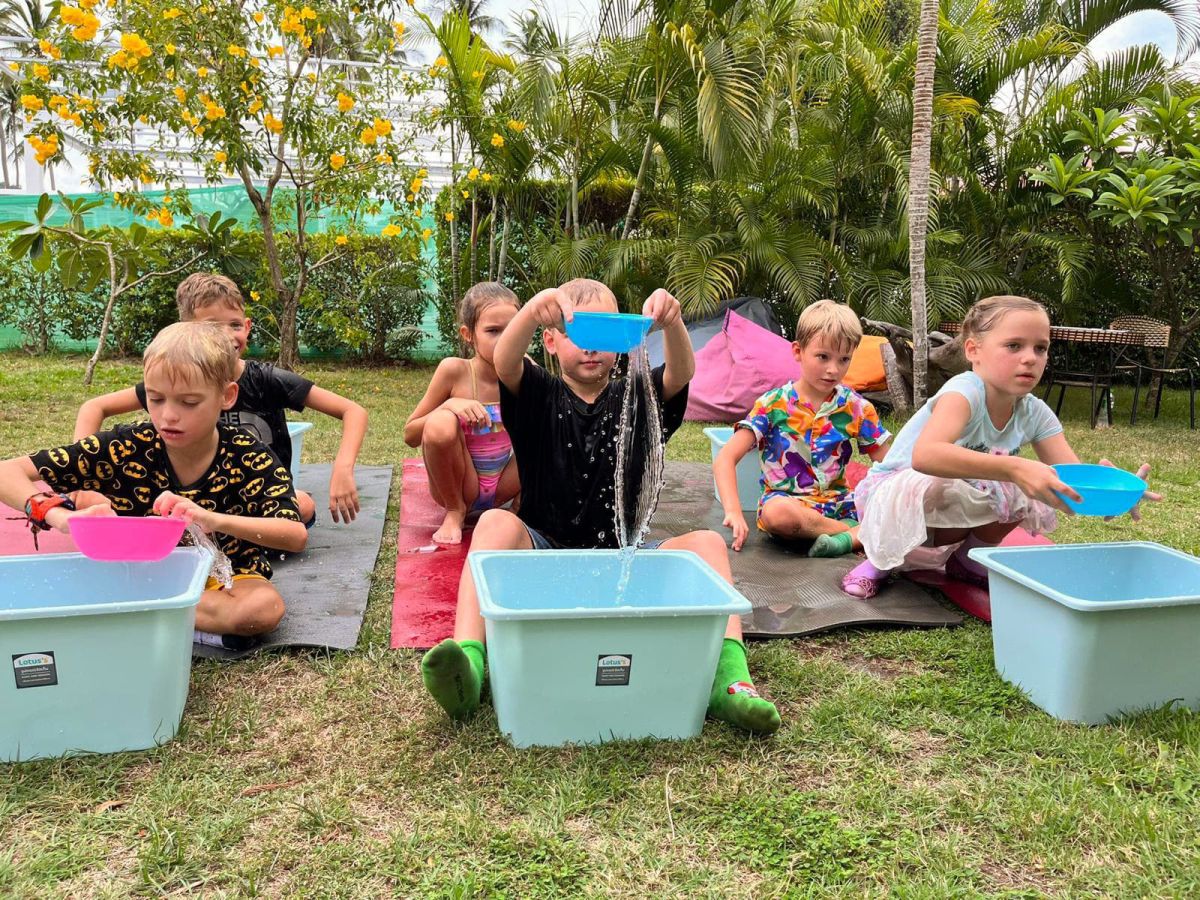
Engagement looks different. It allows pauses. It includes creative play, open-ended activities, and moments where nothing specific is happening. Brief boredom is not a problem in this context. It is a reset.
True engagement requires a specific mental state. As noted by Dr. Dan Siegel, this happens within a child's 'Window of Tolerance' – a state of calm where the brain is receptive to play, not just distracted by stimulation.
On vacation, baseline stimulation is already high. If a kids club adds too much noise, children quickly fall outside this window. They may look active, but their nervous system is simply reacting to stress instead of enjoying the experience.
Screen-free environments naturally support this rhythm. Not because screens are inherently negative, but because removing them changes the tempo of the space.
This distinction is rarely visible in marketing materials. Children, however, respond to it immediately.
A Personal Note: Why I Built Maya Resort Samui
Watching my daughter navigate new places during our travels taught me a lot about hospitality. I noticed a recurring pattern: children often retreat into phones because the environment fails to engage them.
You cannot simply ban technology. You have to provide a better alternative. This conviction is why I founded this resort as family place. I wanted a space where interaction replaces consumption, allowing children to stay children while parents truly relax.
Which Children Benefit From Which Format
There is no universally best kids clubs.
Some children thrive in large, energetic groups. They enjoy noise, structure, and fast-paced activities. They adapt quickly and gain energy from social density. For them, a big kids club can be genuinely fun.
Other children respond differently. Younger children, sensitive temperaments, or children already dealing with emotional or sensory load often do better in smaller settings. This is especially noticeable during longer stays, where overstimulation accumulates day by day.
Previous travel experience matters as well. A child traveling for the first time may need more time to feel safe. A child who travels frequently may adapt faster to new environments.
It is also worth noting that small kids clubs are not ideal for everyone. Limited peer variety, dependence on a small number of staff, or lower activity diversity can be frustrating for some children. This format prioritizes depth over breadth, which is not always the right match.
The key point is simple. The right kids club is not about reputation or size. It is about fit.
What Parents Should Look For Beyond the Photos
Kids club photos tend to look similar. Bright rooms, smiling children, colorful materials. This is not misleading, but it is incomplete.
More useful questions are practical ones. How many children are typically present at the same time. What the staff-to-child ratio looks like during peak hours. Whether parents can stay nearby or step in and out. What happens if a child chooses not to participate. How long activities run before switching. Whether screens are part of the default setup or used occasionally.
These details reveal how a kids club actually functions, not how it presents itself.
A club that allows children to come and go freely usually understands regulation. A club that emphasizes supervision over constant programming often prioritizes emotional safety. A club that openly discusses its limits tends to understand children better than one that claims to suit everyone.
Choosing a Kids Club Is About Understanding Your Child
Some resorts focus on scale. Others focus on depth.
Neither approach is wrong. They serve different needs.
For parents, the most useful shift is changing the question. Not which kids club is the best, but which environment helps my child feel safe, curious, and comfortable right now.
When that question is answered honestly, the right choice often becomes clear. Even if it does not look impressive in a brochure.
Author's Tip: If you hear the answer: "We keep all kids entertained 24/7 without a break," it is a sign to be cautious. A great club knows that children need pauses, quiet moments, and the freedom to just be.
Parent's Checklist: How to Check a Kids Club Before Booking
To understand if a club's format truly suits your child, look beyond the photos. Ask these 6 practical questions before you book:
1. What is the maximum number of children in the club at the same time?
2. What is the actual staff-to-child ratio during peak hours?
3. Is screen time (TV, tablets, consoles) a default part of the program?
4. Can a child choose to observe without participating in the activities?
5. How flexible is the attendance schedule?
6. Are parents allowed to stay for the first 15–20 minutes?
Medical Disclaimer:
The content in this article regarding sensory processing, nervous system regulation, and child behavior is for educational and informational purposes only. It is based on observations within a hospitality setting and does not constitute medical advice, diagnosis, or treatment. While we reference scientific sources (such as the NIH), this information should not replace professional consultation. Always seek the advice of a qualified pediatrician, child psychologist, or occupational therapist regarding your child's specific developmental needs or medical conditions.