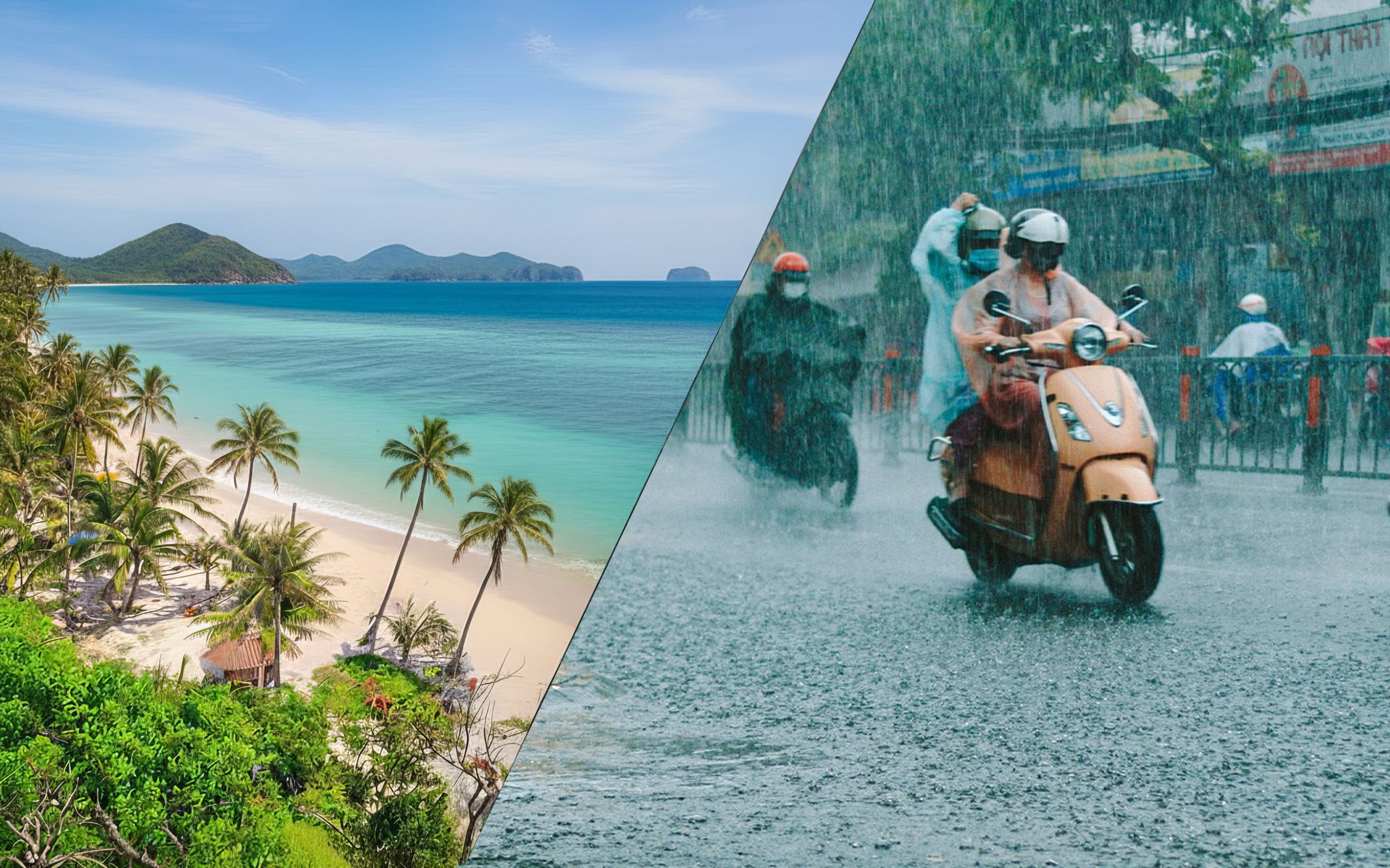
Samui stays warm the whole year, usually around 25 to 35 °C (77 to 95 °F). For families, this is a big advantage, because you never need to pack half a wardrobe just to match the weather. Kids can live in swimwear, parents can survive on light clothes, and nobody wakes up shivering in the morning. The island never has that "cold snap" moment, only shifts in sunshine, clouds, and occasional storms.
Samui, Phangan, and Tao are all in the Gulf of Thailand, so their weather rhythm is nothing like Phuket's. Phuket listens to the Indian Ocean, Samui listens to the Pacific side. If you are traveling with kids and planning beaches, this difference matters. People sometimes mix up the seasons and end up on the wrong coast in the wrong month, dragging tired children through rain they didn't expect.
Important: Samui and Phuket have completely different rainy seasons.
Rainy Season (Oct – Dec)
October to December is when the island gets wetter. The rain can be short and playful or heavy and endless, and it switches moods without warning. Families usually handle this period well if they plan flexible days. A rainy morning can turn into a sunny afternoon, and kids often enjoy the huge puddles more than the adults. The temperature stays warm even during storms, so there is no cold discomfort, just sudden water from the sky. Indoor play areas, small cafes, and calmer beaches still work fine.
In this period, Samui is affected by the northeast monsoon that moves across the Siam Gulf and brings most of the island's yearly rainfall. The shift of wind patterns is the reason why Samui's rainy months fall later than in Phuket. Showers can come suddenly, then clear just as quickly, but the warm temperatures keep days comfortable even during heavy rain. For families, this season simply means planning flexible days and choosing activities that work both indoors and outdoors.
Dry Season (Jan – Sep)
"Dry" doesn't mean something bad. Humidity is high all year round, so you don't need to worry about it.
Everything outside those three wet months is considered the dry season, even though quick showers can still appear. For most families, January to September is the easy choice. Stable sunshine, predictable days, and fewer weather surprises. It is the kind of climate where packing becomes almost boring, because you already know what everyone will wear.
During these months, the island fills with international families. There are festive holidays, too. Christmas and New Year celebrations make Samui feel cheerful in late December. Chinese New Year lands sometime between late January and late February, and the streets get loud and colorful. Thai New Year on April 14th, Songkran, is basically a nationwide water fight that kids treat like the best day of their lives.
High Season and the Windy Months (Jan – Mar)
January to March brings crowds. More strollers, more scooters, more people everywhere. It is Samui's busiest period. February and March also tend to be windy, which means bigger waves. If your children love swimming, you may need to choose beaches carefully. The water stays warm, but the waves can be strong enough to make parents nervous. Lifeguarded beaches help a lot during these months.
Recommended Visit Time
If we had to choose the best stretch for families, we would say April to September. These months feel calm and steady. The winds relax, the sea becomes friendlier for kids, and the island moves at a slower pace. Fewer crowds also mean easier breakfasts, emptier beaches, and less time trying to convince a sun-tired child to wait in line for anything. It is the type of weather that lets families enjoy the island instead of negotiating with it.
Weather guide in table view
| Season | Months | Weather Summary | Family Notes |
|---|---|---|---|
| Rain Season | October – December | Frequent and heavier rains, humid air, occasional sunny breaks, higher tides | Good for budget trips, fewer tourists, flexible plans needed, warm even during storms |
| High Season | January – March | Dry weather, lots of sunshine, stronger winds in Feb–Mar, bigger waves | Crowded beaches, higher prices, kids need supervision near water due to waves |
| Recommended Time to Visit | April – September | Stable sunny weather, low tides, wider beaches, calm sea, light winds | Best for families, safest sea conditions, more space on beaches, easier days with kids |
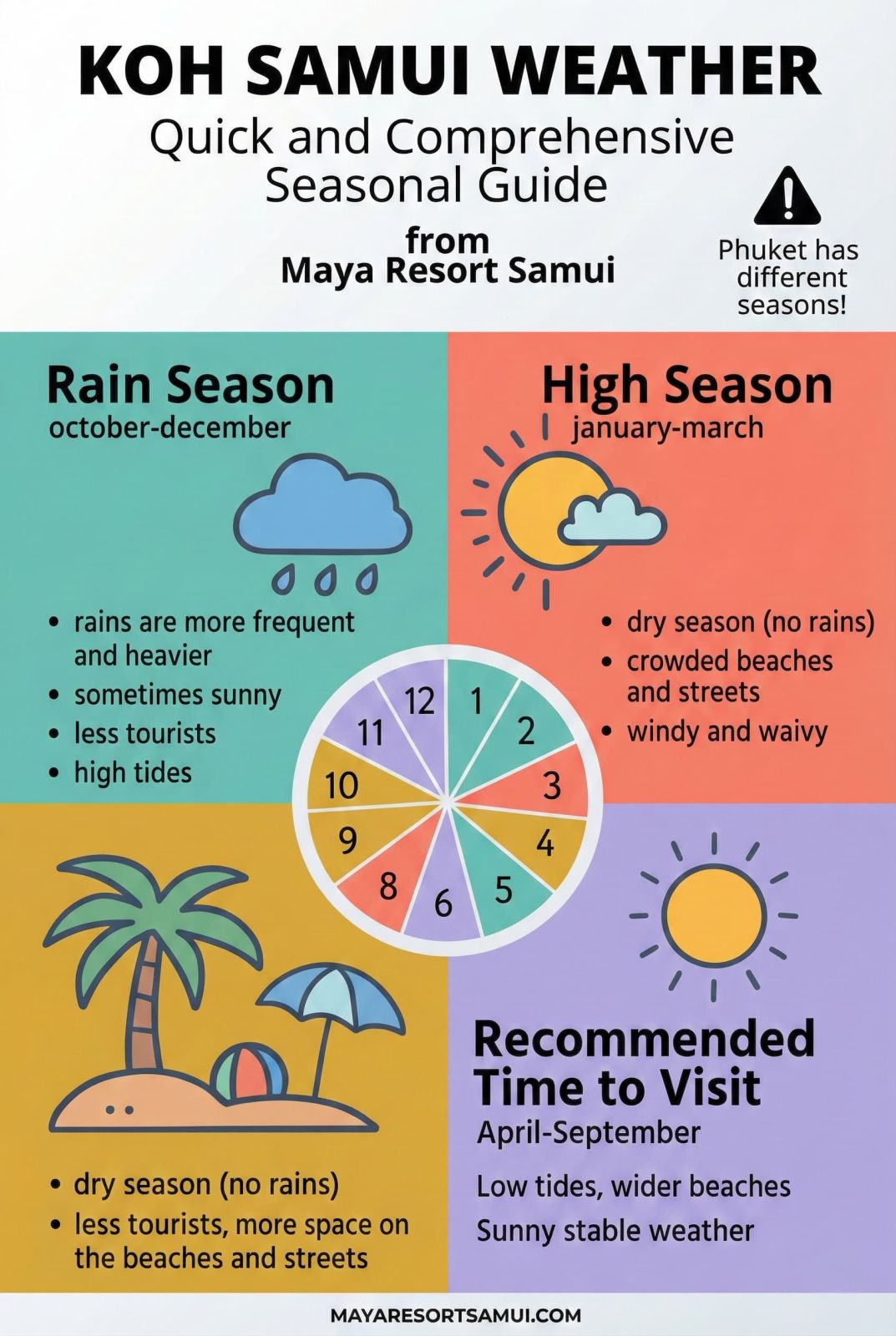
Koh Samui Seasonal Guide (Infographic)
Here is the infographic that shows all seasons on Koh Samui in one simple block. It helps you understand when the island is rainy, when it gets crowded, and which period is the most comfortable for a family trip. Save it so you can use it anytime you plan your holiday.
Official sources and statistics
Official data strongly supports my personal experience of living on Koh Samui for over 10 years. If you look at the rainfall charts, it becomes clear that October and November are the rainiest months of the year. December, however, is already much drier. As I mentioned earlier, closer to the New Year rainfall usually drops significantly, and long rainy periods become rare. This pattern is confirmed by data from the World Meteorological Organization (WMO): https://worldweather.wmo.int/en/city.html?cityId=577.
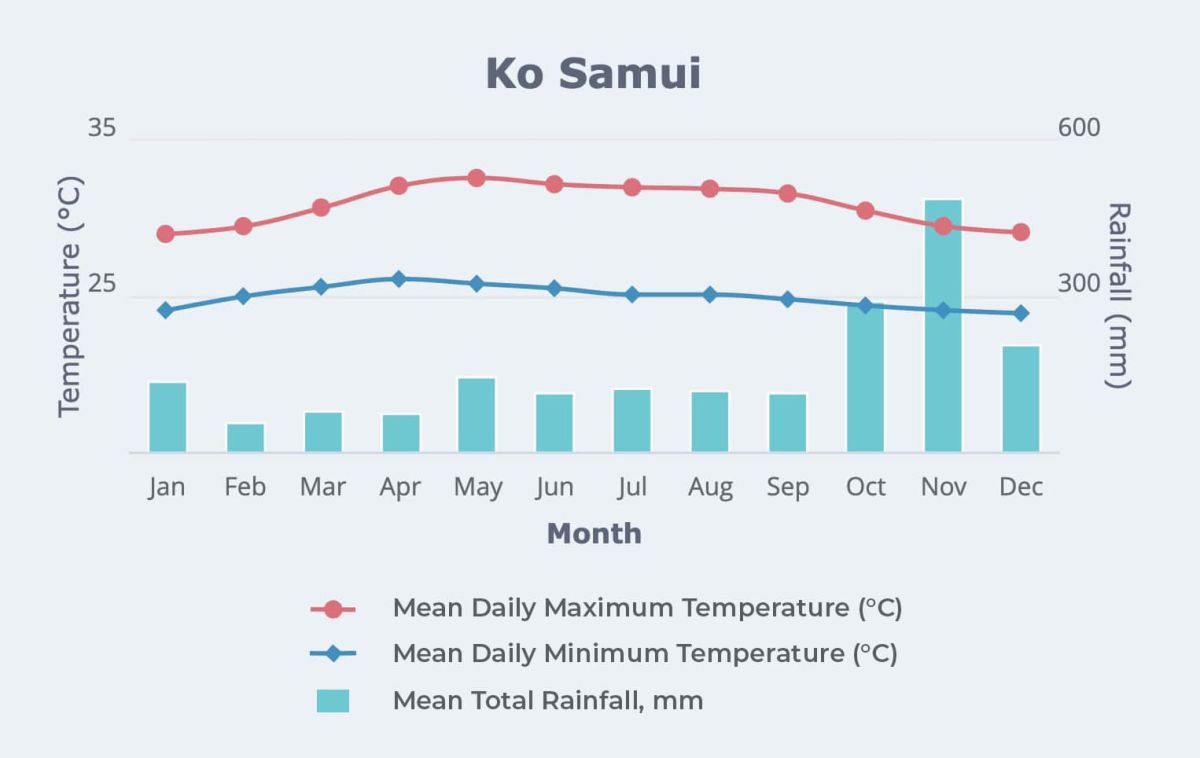
When it comes to temperature, Koh Samui can be visited at any time of the year. The island remains consistently warm, with average daily temperatures staying above 24°C throughout the year.
Climate data (WMO):
| Month | Mean Daily Minimum Temperature (°C) | Mean Daily Maximum Temperature (°C) | Mean Total Rainfall (mm) | Mean Number of Rain Days |
| Jan | 24.1 | 29.0 | 137.8 | 11.0 |
| Feb | 25.0 | 29.5 | 57.8 | 5.5 |
| Mar | 25.6 | 30.7 | 77.8 | 5.0 |
| Apr | 26.1 | 32.1 | 76.6 | 8.1 |
| May | 25.8 | 32.6 | 146.5 | 14.8 |
| Jun | 25.5 | 32.2 | 112.7 | 14.5 |
| Jul | 25.1 | 32.0 | 122.8 | 14.4 |
| Aug | 25.1 | 31.9 | 118.7 | 15.0 |
| Sep | 24.8 | 31.6 | 116.8 | 15.9 |
| Oct | 24.4 | 30.5 | 290.2 | 19.7 |
| Nov | 24.1 | 29.5 | 489.6 | 19.6 |
| Dec | 23.9 | 29.1 | 209.1 | 14.0 |
Compared to Phuket, which is influenced by the Indian Ocean, Koh Samui is affected primarily by the northeast monsoon. This creates a completely different weather pattern in the Gulf of Thailand and explains why Samui's rainy season peaks later in the year.
This difference is also confirmed by the UK Met Office. According to their official website: https://weather.metoffice.gov.uk/travel/holiday-weather/asia/thailand
If however you're heading to the east coast of Thailand (the gulf coast), such as Ko Samui or Ko Chang, the cool season sees this area hit by the northeast monsoon with consistent rain between October and January, peaking in November.
Hopefully, this short guide helps you choose the right time to visit Koh Samui and better understand how its climate really works in practice.
What these numbers actually feel like in real life
Numbers say "rainy day", but in real life it's rarely rain all day. Most of the time it's a hard tropical shower for 20–30 minutes, then blue sky again. You can have coffee in the sun, get soaked on the way to lunch, and be back on the beach an hour later.
October and November are the only months that truly feel wet. Rain comes more often, the sea is rougher, and some days are grey. Still, even then it usually rains in bursts, not nonstop. Life doesn't stop, cafés stay open, roads are fine.
December feels like a reset. Rain drops off fast, the air feels lighter, and days become more predictable. By late December, many days are fully dry, which is why New Year on Samui already feels like high season.
Temperature is simple. It's always warm. Even the "cool" months feel comfortable, not cold. Mornings and evenings are easy, midday heat is manageable, especially near the sea.
Humidity is the part numbers don't show. After rain the air feels heavy, clothes dry slowly, but the island turns green and alive. That's the trade-off.
Living on Samui isn't about chasing perfect weather. It's about knowing the rhythm, and once you do, the climate stops being a problem at all.