

Planning a family holiday to Koh Samui requires a clear understanding of the island's unique pricing dynamics. While Thailand is celebrated for budget-friendly travel, it is worth noting that Koh Samui carries a distinct premium compared to the mainland or even Phuket. Expenses for dining, transport, and activities here are on average 30% to 50% higher. For a comfortable family vacation of a mid-range class (with car rental, dining at beachside cafes, and excursions), a family of four should expect to spend between $70 and $120 USD per person daily, excluding accommodation.
By the way, if you are still wondering where to go in Thailand, we have a great comparison article: "Phuket vs Samui. Where is better to stay with a family?". Both islands are popular, but they offer very different conditions for families. So, investigate before making your final decision.
Let's look into it together. Here we offer a detailed and honest breakdown of transport, food, and activity expenses to help you plan your trip without unnecessary hassle.
A Brief Introduction to the Economics of Koh Samui
Several geographic and infrastructural factors drive the higher cost of services and goods on Koh Samui. The primary factor is the aviation monopoly at Samui International Airport (USM), which is privately owned, limiting budget carrier access and keeping direct flight fares high. Additionally, as an island, Koh Samui relies heavily on shipping goods, food, and energy from the mainland, which adds a structural logistics premium to everyday consumer items. Knowing this helps parents set realistic budget expectations and choose where to save and where to spend.
We have a dedicated article, What to Do in Koh Samui with Kids – Practical Family Guide by Age, Weather, and Budget, which will be very useful for planning your activities and recreation options.
Travel Style Cost Breakdown
Your overall budget will vary based on your family's travel style. Below is an estimate of daily operational outlays for a family of four, excluding lodging:
- Budget / Economy Style – 500–2,000 THB ($15–$60 USD) per person daily.
This involves using shared songthaews, eating local street food or at mobile stalls, and enjoying free natural attractions like public beaches outside of hotels. - Comfort / Optimal Style – 3,000–9,000 THB ($100–$250 USD) per person daily.
This tier includes renting a compact car, dining at casual beachside cafes, and booking structured day tours. - Premium / Luxury Style – 15,000–30,000 THB ($400–$1,000 USD) per person daily.
This includes private transfers with a personal driver, high-end resort dining, and private chartered yachts.
It is important to note that these figures are not final and are very approximate. They are based on official sources and personal experience.
Seasonality and Pricing Fluctuations
The timing of your visit has a major impact on your overall budget. Renting accommodation or a vehicle for a month will cost one rate, while renting for just a few days will yield completely different prices. Seasonality also directly dictates the cost of car rentals, excursions, and other services:
- High Season (December to April): Ideal weather drives peak demand, raising excursion and service prices by 20% to 40%. January and February are generally the most expensive months.
- Shoulder Season (May and September): Standard rates apply. Tourist numbers decrease, offering a good balance between costs and weather stability. Check our practical seasonal weather guide for families to plan your timing.
- Low Season (September to October): Prices for activities, transport, and dining drop by 15% to 30%. September is the most economical month for vehicle rentals and local excursions.
- Rainy Season (October to December): Heaviest rain occurs, particularly in November. While prices are low, count on high cancellation rates and closures of marine parks.

Aviation Logistics and Transit Costs
Getting your family to the island is often the largest upfront cost. Direct flights from Bangkok to Koh Samui range from 3,500 to 6,000 THB one-way per person due to restricted airport competition. In comparison, direct flights from Bangkok to Phuket or Krabi range from 1,200 to 3,500 THB. While flying into Surat Thani on a budget carrier and taking a bus-ferry connection saves money, it adds 5 to 7 hours of transit time, which can be exhausting for young children.
We have detailed all types of flights in a separate article: "Bangkok to Samui with Kids". You can also use our dedicated service for booking tickets.
Ground Transportation Costs
Navigating Koh Samui requires careful planning, as the island lacks a municipal public bus system and taxi rates are high. Let's break down what options are available on the island. In reality, there are not many. It is either rented transport (a car or a scooter) or a taxi.
Public Transit and Taxis
Songthaews (passenger pickup trucks) run routes along the coastal ring road during the day, costing 50 to 100 THB ($1.50 to $3.00 USD) per person. However, costs quickly add up for a family of four, and after dark, they operate as private charters with high negotiated rates. Standard taxis do not use meters and operate on flat rates. Families should always agree on a price before boarding. Pre-calculated fares on the Grab app help avoid negotiations, though booking fees apply (up to 150 THB for 7-seater vehicles).
Here are the approximate taxi rates on Koh Samui:
- Airport to Chaweng: 400 THB (Car) / 550 THB (Van)
- Airport to Bophut: 400 THB (Car) / 550 THB (Van)
- Airport to Lamai: 500 THB (Car) / 650 THB (Van)
- Airport to Nathon Pier: 600 THB (Car) / 750 THB (Van)
- Chaweng to Lamai: 400 THB (Car) / 600 THB (Van)
- Bophut to Maenam: 400 THB (Car) / 600 THB (Van)
Private Car Rentals
Renting a private vehicle is often the most cost-effective transportation option for families on Koh Samui. A compact option like a Toyota Yaris averages 1,000 to 1,200 THB (~$26 to $32 USD) per day, while standard SUVs (like a Toyota Fortuner) run about 2,500 THB (~$66 USD) per day. Renting a car also protects your family from the safety hazards of scooter rentals on busy island roads. You will need a passport, an International Driving Permit (IDP), and a credit card for a security deposit (typically 5,000 to 15,000 THB).
The Culinary Cost Spectrum
Dining on Koh Samui is highly varied, ranging from budget street markets to expensive resort dining experiences.
Night Markets and Street Food
Local markets and roadside stalls offer the best food value. Traditional dishes like Pad Thai, Pad Krapow, or chicken rice typically cost between 60 and 90 THB ($1.70 to $2.50 USD) per plate. The Friday night Fisherman's Village Walking Street in Bophut and the Nathon Market are popular family options, allowing a family of four to dine on satay and fruit smoothies for under 600 to 800 THB (~$17 to $23 USD) total.
Mid-Range Beachside Cafes
Mid-range cafes along beach roads serve a mix of Thai classics and Western comfort foods like pizza, pasta, and burgers. Main courses range from 200 to 500 THB ($5.50 to $13.70 USD), with a standard three-course family meal costing around 1,500 to 1,800 THB (~$43 to $52 USD). To see what dining options exist close to home, explore the resort restaurant options at Maya.
Resort Dining and Buffets
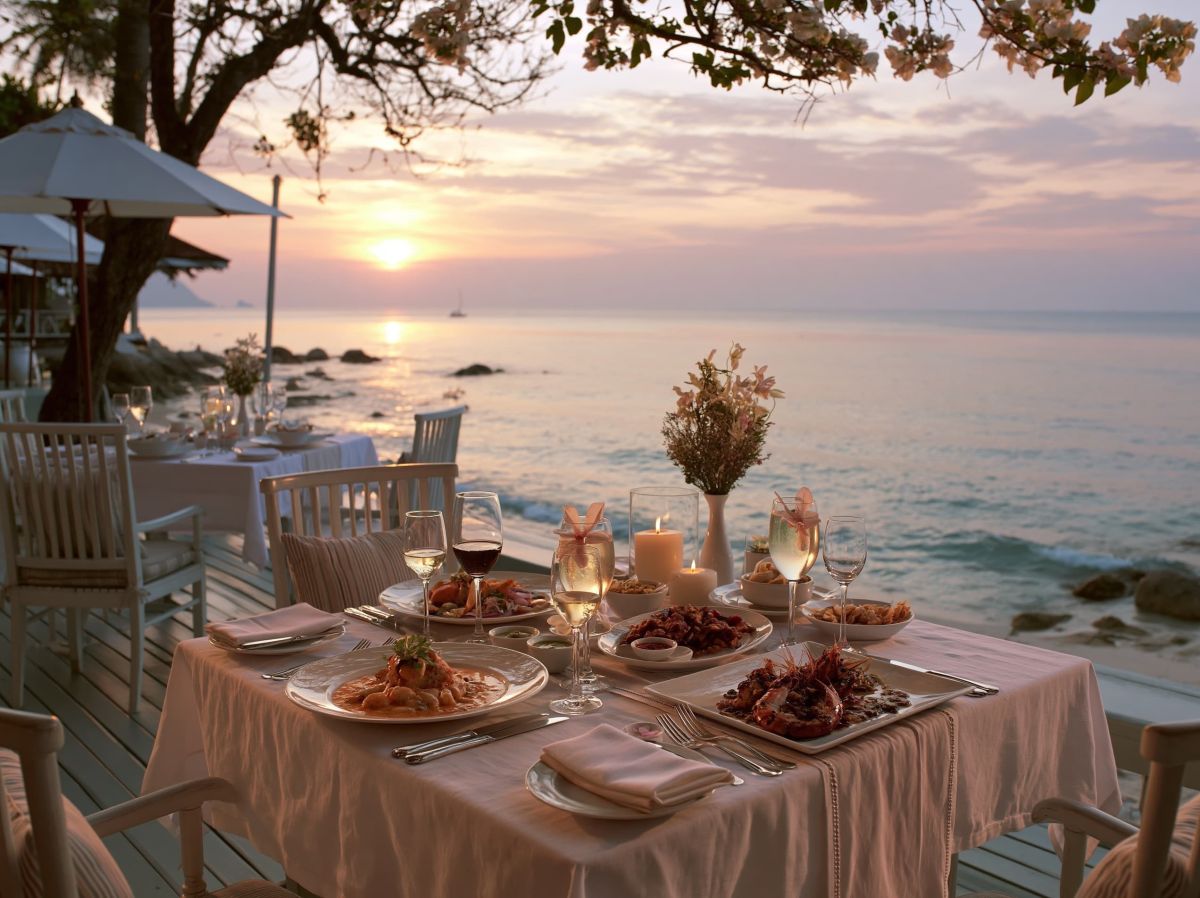
Upscale resort dining carries a premium. Beachfront theme buffets are highly convenient for families but require a larger budget. Beachfront BBQ buffets are typically priced at 2,500 THB net per adult and 1,250 THB net per child (ages 5–12), with kids under 5 eating free. Private family in-villa barbecues start at 8,500 to 10,400 THB (~$245 to $300 USD) per couple, which is a popular upgrade when booking a spacious Family Villa.
Imported Western Foods
If your children prefer Western meals, expect higher bills. Dairy products, beef, lamb, and specialty cereals must be imported, carrying a 50% to 100% markup over local equivalents. A standard Western breakfast for two adults at a beachside cafe can easily reach 700 THB ($20 USD), and imported wines and spirits are subject to steep national luxury taxes.
Family Activity Excursion Budgets
While relaxing on the beach is free, specialized family parks and full-day excursions represent a significant investment.
Water Parks and Land Play
Structured land-based attractions provide fun breaks from the beach. Pink Elephant Samui Water Park in Maenam features a wave pool, a lazy river, and a children's lagoon. Family packages (2 adults + 2 juniors) cost 3,220 THB (~$92 USD), and a spectator pass is available for 200 THB. Entering after 4:00 PM on weekdays reduces the entry fee to 60 THB per person. Other paid activities include Outrigger Laser Tag at 150 THB per hour, and Central Samui Mall's paid arcade games. For smaller hotels lacking children's facilities, buying day passes at larger resorts (such as the Holiday Inn Family Day Pass for 4,000 THB) grants kids access to slides and supervised play. For guests at Maya, you can review our dedicated Kids Club facilities which offer a range of indoor and outdoor activities.
Island Hopping Excursions
Exploring the surrounding islands is a highlight of a Samui trip, but choose your destination based on your children's ages and stamina. For younger children, a trip to Koh Tan and Pig Island (Koh Matsum) is highly recommended. The boat crossing takes only 15 minutes, and kids can feed the pigs on the beach. Shared tours cost 2,800 THB per adult and 1,400 THB per child. However, booking a private longtail boat charter starts at 3,500 to 5,640 THB flat per boat, which is often cheaper for larger families and offers total schedule flexibility.
For older children (ages 6+), Ang Thong National Marine Park offers scenic kayaking and viewpoints (VIP Speedboat: 1,500 THB per person; Big Boat: 1,200 THB adult / 800 THB child). Note that there is a mandatory National Park entry fee of 300 THB per adult and 150 THB per child. Koh Tao snorkeling trips cost 1,800 THB per adult and 1,550 THB per child, but involve a bumpy 2-hour speedboat ride each way. For a broader list of activities, see our guide on what to do in Koh Samui with kids.
Ethical Elephant Sanctuaries
Visiting an elephant sanctuary is a highly rewarding experience. Koh Samui is a hub for ethical elephant tourism, enforcing a strict "no riding, no bathing, no performance" policy. Operating these sanctuaries carries high costs, which is reflected in the ticket prices:
- Samui Elephant Sanctuary: The standard 3-hour program costs 3,000 THB per adult and 1,500 THB per child (ages 5–11), with kids under 5 entering free. Booking directly on their website for visits between February 1 and June 30, 2026, reduces the rate to 2,700 THB per adult and 1,200 THB per child. A shorter 1.5-hour program costs 2,000 THB per adult and 1,000 THB per child.
- Samui Elephant Haven: The standard 3-hour experience costs 3,000 THB per adult and 1,500 THB per child, while a brief 45-minute feeding program is priced at 1,000 THB per adult and 500 THB per child.
Parents should avoid cheap "elephant tours" offered by beach vendors for around 500 THB, as these do not meet ethical standards for animal welfare and veterinary care.
To help you plan your budget, the following articles will be useful:
Strategic Financial Planning
To optimize your family's travel budget without sacrificing comfort, follow these 5 rules:
- Book Flights and Rentals Early: Book flights and car rentals at least two to four weeks in advance. If possible, travel in September to take advantage of the lowest seasonal rates.
- Hire a Compact Car: Point-to-point taxi fares add up quickly. A daily car rental at 1,000 to 1,200 THB easily pays for itself and gives you complete freedom of movement.
- Adopt a Hybrid Dining Plan: Mix premium beachfront resort meals with authentic street food dinners at local night markets or village cafes. This cuts food costs by more than half while keeping dining exciting.
- Leverage Private Charters: For island excursions, compare the cost of individual tour tickets against a private longtail boat charter. For families of four or more, a private charter is often cheaper and lets you set your own pace.
- Balance Paid and Free Activities: Alternate paid water parks or sanctuary visits with free natural sights. Exploring Na Muang Waterfalls, swimming at Hin Ta Hin Yai, or snorkeling at Coral Cove Beach cost nothing and keep the itinerary diverse.
Frequently Asked Questions about budgeting Excluding lodging, a comfortable mid-range budget for a family of four is approximately 3,600 to 9,100 THB ($99 to $249 USD) per day. This covers a compact rental car, casual dining at local beachside cafes, and standard day excursions or entry fees. Renting a car is significantly cheaper for families. A single round-trip taxi ride between major beaches can easily equal or exceed the 1,000 to 1,200 THB daily cost of a compact rental vehicle, making a rental car highly cost-effective. Koh Samui Airport is privately owned and operated by Bangkok Airways. The lack of low-cost carriers flying direct routes limits competition, keeping direct one-way fares from Bangkok high (typically 3,500 to 6,000 THB). Cheapest tickets are here A meal for a family of four ranges from 600 to 800 THB at local night markets, 1,500 to 1,800 THB at mid-range beachside cafes, and upwards of 7,500 THB for beachfront resort themed buffets, excluding beverages. You will need a mix of both. Large hotels, car rentals, and upscale restaurants accept major credit cards (often with a 3% fee). However, local night markets, songthaews, beach vendors, and ethical sanctuaries require cash in Thai Baht (THB). Keep some cash handy for daily small purchases. Normally, no. Samui runs on Thai baht, not foreign cash. A few high-end resorts, tourist shops, or private services might accept US dollars or euros, but that is the exception, not something to count on. And even when they do accept it, the exchange rate is usually bad.
For street food, local markets, taxis, small cafés, laundries, convenience stores, and most everyday spending, you'll need Thai baht. So the practical answer is: bring dollars or euros if you want, but exchange them first and pay in baht. Yes. If you go on marine tours (like Ang Thong National Marine Park), there is a mandatory entry fee of 300 THB per adult and 150 THB per child. This fee is always paid in cash upon arrival and is rarely included in the tour ticket price. Tipping is not traditional in Thailand but is highly appreciated. Upmarket restaurants often add a 10% service charge to the bill. For tour guides, private drivers, or massage therapists, a tip of 100 to 200 THB is a generous way to show appreciation for good service.
For street food, local markets, taxis, small cafés, laundries, convenience stores, and most everyday spending, you'll need Thai baht. So the practical answer is: bring dollars or euros if you want, but exchange them first and pay in baht.
Where you sleep sets the rest of the budget: compare the nightly totals against a family resort in Koh Samui where the villa, the kids club and breakfast already sit in one price.

![Bangkok to Samui with Kids. <span>4 Flight Survival Rules [2026]</.span>](/img-gen/width/450/80/uploads/blog/bkk-usm1_682e0fec.jpg)


